PID controllers: DIY seed generators and more
Posted in: Geek Gear - Cool Tools (Read-Only)
@deborah2 whoa! A $100 sous-vide controller, that's fantastic 

@deborah2 whoa! A $100 sous-vide controller, that's fantastic
@volnoir I use it right away, otherwise it creates lumps. The chocolate is brought to working temperature before adding the butter, so the crystals don't melt. It seems anywhere around 31-32C is fine.
The noise originates from the motor area. I've done a belt change, oil check, and greased any parts that seem relevant. The noise does not happen when you simply spin the drum.
Logan
What is making the whine? The motor or the phase converter?
Hey,
Have a used ECGC 65A Ive recently hooked up with single to 3 phase control box. It makes a high pitched whine when the motor is turned on, and the pitch changes with the frequency control knob. It is very annoying. I am in contact with an electrician and Cocoatown, but was wondering if anyone had any advice or experience with fixing this. Thanks.
Rice cooker (analog, because the power goes out here in Panama every once in awhile) connected to a Dorkfood sous vide temperature controller set at 93F. Cocoa butter in small glass jars in baggies. Probe from the controller into the rice cooker, held down with the lid. Water in rice cooker up the side of the jars about half way. Total equipment cost about $125. I've been using this for several months now and it works like a charm. Perfectly tempered chocolate in minutes. The water really isn't an issue, but I'm careful to pat the jar dry when I pull it out of the baggie and before I unscrew the top.
Interesting. Did you use the seed straight out of the water bath, or did you let it cool/harden and then shave it into your chocolate?
Hi Tim,
Do check the 'end float' on the stone wheels, ideally with the washer and M6 nut snugged up the wheels should spin freely but the wheels shouldn't be able to move up and down the shaft much at at all. These things are a very cheap device, unfortunately the manufacturing tolerances seem to be a bit hit and miss. The HDPE bushings are a two piece effort with a piece inserted and glued from each side, there shouldn't be a big gap between the two parts of the bushing inside the stone?
I've also noticed that on some stones on the ones we have that the bushing is quite a loose fit on the shaft, if there is a bit more end float 'stuff' including dust can get in between the bushing and shaft. I haven't had the issue you seem to have (yet), if I needed to correct the end-float I'd probably try re-cutting the thread on the shaft with a M6 die so I could tighten more, I imagine using a thicker washer could also work? Alternatively, replacing the center assembly might help. Hopefully, there's not stone /grit worked into the revolving stones bushings, if present it will grind on the shaft as shown by 'witness marks; on the stainless shaft. Again, these grinders aren't build for HD chocolate making, you can get away with using them, but there apparently are one or two design weakness.
Mark
Ok, because of the 2am cleanup finishing around 3am, a little slow at getting the pics up. However, the lube appears to be cb with granite dust. In one of my last batches of 2-ingredient dark chocolate I found a big glob of it with the last 8-10oz of chocolate. I've poured that in a container un-tempered to solidify before throwing out. Looking at it now, it's cb. It has the same temper/texture/solidity that the cb immediately around it has, only it's pitch black with some sort of metalic sparkle to it (hence when seeing it in liquid form looked like a separate lube).
I've done the dry sugar thing on my Santha, but that was several years ago. I was told in some posting or another in the years since that it's not a suggested practice since it's a wet grinder and can damage the machine by running dry foods through it. I take it that's gone back to standard practice again?
What I have done to clean, other than running 4 batches of chocolate through one machine and 2 batches through the other, is I've poured hot water and a degreasing soap into the machine and let it run for a few minutes. Took it apart and washed/scrubbed thoroughly as a first cleaning procedure.
As a secondary suggested procedure to knock and collect dust, I did run an oil/sugar mix through the machines for about 2 hours. It discolored the oil but I've since cleaned that out.
I'm thinking at the moment, the biggest worry is the seizing wheels. I'm not sure what could be causing that, and I'll have to take the wheels out into daylight to see if there's scratching or marring on the white bushings that I cant see in the indoor lighting for some reason. It's worrisome because it's happening on 2 assemblies, not just one machine.
Since I have one machine open with a newly cleaned and dried wheel assembly, I've run the dry sugar through for about 45 minutes. That did not discolor the sugar, and I'm in process of cleaning that out and getting it dried again. The other machine I'll have pics posted of the chocolate free siezed wheels and they're disassembly up as soon as is possible.
I use these for prototype batches, looks like you have stone dust and or food grease with gray metal wear particles dissolved in a sea of CB?
Did you 'run-in' the grinders with a 1lb of sugar before use? You do need to bed in the stones before making product. A 30 minute run with sugar helps settle the stones against the base stone, then discard and wash up. That said, before you use the grinder for the first time undo the nuts holding the wheels on and clean and grease the spindles with some FDA legal food grade grease (Lubriplate FGL-2) it will stop the sugar getting into the stone's bushings. Personally, I've found the stainless steel shafts the wheels revolve on to be a bit soft and the shaft will wear / gall if any grit gets between the bush and shaft. The stone dust (granite) and even some unrefined sugars are effectively a form of grinding medium. Once you have bedded the stones, discarded the sugar and wash and dry the set up, you can wipe off the shafts to remove the food grease, it's a DELRIN (as Erin pointed out) bushing really should be self lubricating.
Also, when making chocolate with a Premier I never add sugar before having nicely liquid cocoa and or cocoa butter circulating to prevent any particles getting into the shafts. I will also sometimes 'grease' the spindles with CB after I clean my grinders and reassemble for the next batch. The premier grinders are a great small batch option but the spindles and bushings are the one thing that is less than ideal from a santitation point too.
Is anyone else making heavy use of PID controllers?
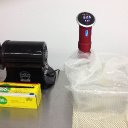
I have an anova sous-vide controller generating cocoa butter seed; on the included picture it's set at 92.5F.
A ziploc bag at 34C for 12 hours then at 33.5C, up to 100g of cocoa butter seems to work well; I dry the bag and cut a tiny bit of a corner to use the seed, which takes care of any remaining lumps. It's also worked with a glass jar inside a ziploc bag. The same setup was also used at higher temperatures to infuse cocoa butter with spices.
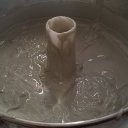
On the second attached picture is another PID controller, this time a Sous-Vide Magic 1500. I used plexiglass, duct tape, a heater, fan and hacked chafing dish to assemble this heater. This probably doesn't make economic sense if you have to buy all those things - I had an old spare PID controller hanging around and wanted a proof of concept. I learned that ceramic heaters are a really bad choice and will use a hair dryer next
Next I'm getting quotes to build the box in stainless steel and cut the chafing dish holder that would sit on top, so I can use regular restaurant-sized chafing dishes.
In another chocolate workshop I saw a micro-controller running a PID algorithm, controlling an old freezer to keep it at a higher temperature than the one it was designed for. Arduino, Raspberry Pi and others would be good choices - and given time I would get some together to have a seed generator that isn't water based and maybe hack a freezer to be a cooling tunnel.
For the moment my bottleneck is molding bars and packaging them fast enough to be able to get to break-even, so those projects have to wait. I hope this gives people ideas and this thread encourages people to share.
Other stuff meaning: a heated container and a vibrating machine. Yesterday I realized putting chocolate in moulds isn't the actual bottleneck just yet. I spend a good chunk of time manually removing bubbles and feel the need to work faster because chocolate is starting to crystallize.
As soon as I build the other stuff, I intend to get the PM600 .
This past season I chose to expand the new small business production and got 2 premier wonder grinders. And I'm having problems with both.
When I went to make some white chocolate, it came out a very sickly grey. No off flavors, but just sickly grey. After the first batch like that, I pulled the hub assembly out and saw there is a lot of black lube in the wheel; more specifically it seemed to have hidden/stored in the gap between the two-piece axle shaft assmbly that is epoxied to the wheels.
After trying to clean that out the best I could, I got a less grey, but still sickly looking white chocolate. After cleaning hard again - difficult because of the small opening I had to work with. and yet again another batch (third one) that is unusable because of it's sickly color.
Thus far, it looks and tastes like it's a food-grade lubricant of some sort, which I dont mind, just want it gone so it doesnt discolor my chocolate. I eventually went through both with a dip tube brush from my beer keg cleaning gear, which was the only small scrub brush that I have that would fit in there.
I *think* I've gotten it all out, but now I'm having issues with both assemblies with the wheels seizing. They "float" across the bottom, but do not spin. When I first saw this, I pulled the assembly and took it apart. There appeared to be plastic or string kinda twined in there. Pulled that out and inspected the wheels but I'm not seeing any damage at all. I put the other assembly in (2nd machine not in use) to finish the batch, and this one also seized up.
Anyone else having these issues? I've attatched the grey vs fresh add to the grinder for color comparisons. This is getting a little frustrating at this point.
I'm currently in the process of emptying the grinder that currently has the siezed wheels. As they get cleaned I'll post pics. I'm really hoping this isnt due to something stupid on my part. I've been careful to disassemble and reassemble exactly as they were. Seemed to be working fine with the lube in there other than tainting the chocolate. But now that it's cleaned, not seeming to work right.
Sounds like a fun project!!!! Let us know what system you come up with...
It looks custom. Most packaging is. Depending on how it's closed, it could be an affordable alternative to a traditional box. Do you have a sample box?
I'm looking for a package with similar form factor to the newest one from Manoa. Do you know who makes it?
Hi Sebastian,
I'm interested into hearing more about the job offer at hand. Shoot me an email...gustaf@chefdepartienyc.com
Sincerely
Gustaf
Which one did you go with? Can you provide a link?
Hi All,
As many of you will already know, producing short run bar boxes can be an expensive endeavor. While 1000 may seem like a lot of bar boxes, it's only the number 1 to print shops, and more importantly, to the processes involved in printing, folding and gluing boxes. I'd be interested (as would a fellow Chocolate Life member) in hearing from others who may wish to collaborate on a group run of bar boxes.
Be well!
Marc
I found a model for about $350 at simplypumps - it's hard navigating the different models online and they seemed the most approachable for beginners. I've had a 3D printer but don't like the look of the material and I'd also need to buy a motor; I prefer having something that should be resellable.
What information did you find about peristaltic pumps? I was hoping to find/buy a cheap one but no luck. Is printing one the best way to go?
A friend of mine is in need of someone with chocolate making experience for a position in Dubai. If you're interested, pls contact me directly through the board messaging system and we'll see if you might be a good fit for him.
Thanks
-Seb
Ah, thank you! For some reason this didn't show up in my search results.
You can try this thread: https://www.thechocolatelife.com/clay/group_discuss/1267/diy-depositor-is-it-possible
The main reason I was considering a full-automatic tempering machine was to have a dosing pump. I then found Hilliard makes one that which costs significantly less, though still around USD$5,000.
Researching various pumps it seems that peristaltic pumps could be a very affordable way to hack it together. There are even a few people 3D printing pump heads through which you could put a food-grade hose.
Are there other cheap options I should be considering? Has anyone gone the DIY route and have advice to share?
James, As your in the UK, I think you will find CO2 in a cylinder easier to find than 'dry ice' (solid CO2 which needs to be stored at -70C) although note you can make slugs of solid CO2 from a cylinder that's fitted with a dip tube using a special draw off device that traps the liquid as it is flowing from the cylinder.... Don't know how expensive these are, it's years since I last used one in the laboratory.
Suggest you get friendly with a local Pub owner and 'borrow' a cylinder of CO2 and the regulator, pipe the gas into the bag at say 2 - 3 psi and allow it to 'escape' for a while, once you have flushed the air out of the bag, seal it up and cross fingers it will be good to go. If you can't get a loaner, welding supply firms can hook you up with CO2 (your want disteller's grade really - same as used to serve beer, some CO2 is a mix intended for welding only not food) FYI: Firms like MachineMart sell cheap cylinder regulators and fittings..Again you need to reduce the pressure from the cylinder's hundreds of pounds per sq inch to a 'gentle purging wiff'.... PLEASE NOTE BELOW
SAFETY: Be sure to use a stand or chain the cylinder to the wall if it falls it can break off the top and turn into a lethal heavy weapon. CO2 is an asphyxiant in a closed space and will displace the breathable air, use only in a well ventilated space. The UK H&S regs may even require a gas monitor to be installed in a space that contains gassed up bags? Please use prudence and common sense.
Mark
Thanks, the 300 to 500 an hour is for smaller pieces, like hearts in red and pink foil, or other smaller pieces usually less than 2" x 2".
I just place bars on the foil and then fold up and over. Usually can do about 4 a minute that way. Do you use this technique for bars? Certainly sounds interesting and I like your numbers, there is no way I can wrap 300 an hour, that usually takes me all day.
Hello all,
I am wondering what others are doing to wrap solid pieces of chocolate in foil. Foil wrapping machines are so expensive (around $30k for a used one) and are HUGE.
Currently, we have been having our employees wrap by hand. We get pre-cut foil squares and deal them out, like a deck of cards, onto a 1" foam mat (like foam used as a seat cushion). We then place the chocolate on the foil squares and press down on the chocolate so it sinks into the foam. This causes the foil to form around the chocolate and "pup up" and form around the edge of the shape we are wrapping. It is then wrapped the rest of the way around.
Using this method we can wrap anywhere from 300 to 500 pieces an hour (depending on the shape/size of the piece) per person.
Wash, rinse and repeat...
I just wanted to see if anyone else has any tips or techniques to share or had developed any tools to help move things along.
Thanks!
Sorry i posted that before properly reading Jordans earlier post.
I will contact my main supplier in Nicaragua and see if they can sort out some of these grainpro bags as they sound like a step in the right direction.
Also i will look into getting the one that CO2 can be used with for treating my current stock of cocoa beans and give it a test.
Will report back with my findings.
Some brilliant suggestions here, and I am glad it has created a discussion about an issue that will unfortunately likely affect us all at some point, and perhaps a topic which producers don't like to discuss in the open (just from my experience in trying to find info on these moths).
This is the first I have heard of the grain-pro bags, and they sound great. But like Sebastian I too would be concerned about high moisture trapped in the sealed bag, and essentially 'sweating' in warmer high humidity environments.
I unfortunately do not have access to a large cool room in which to store my beans and so stop the hatching of the eggs. Mine are stored in my workshop and the temp can range anywhere from 10-25 degrees centigrade depending on our unreliable british weather. So I am certainly interested in any other way to prevent or combat a moth infestation.
So far the CO2 method seems most efficient and organic, but what's the safest way to go about treating the beans in this way?
Hi Tony we know longer have it. I am updating the list. Thanks for your interest however.
I'm looking STEEL COATING PANS to cover walnuts or almonds with chocolate. Please send information on new machines or used!
thanks
Hello I am interested in the Savage Bros 50 lbs tank, please e-mail me pics, specs and price at: tony.najjar@xocolla.com
Just to report back for anyone interested. I did a small batch 1.5Kg of 70% Dark. I tried the sugar method and blended the sugar and lavender flowers in a food processor prior to putting them in the melanger and it came out fantastic for a first time trial. The lavender was a little light for my tastes so I will be upping it slightly, but overall it is a good start. Thanks Clay for the suggestion.
I'm a skeptic by nature (aren't all scientists?) - sounds like there's an excellent opportunity here to do some controlled tests on a lot of beans, mix them up, ship half in GP bags, and the other half conventionally. Toss in some data loggers, and count what crawls out of each test.
Lots of enterprising small batch folks here who are ordering beans. I'll help you construct the study. Who wants to do a ship test in the name of science! One caveat is the beans would need to disembark from a port such that the transit carries it across the equator, preferrably during winter in the northern hemisphere.
Hello Jordan.
I was about to post a question for Sebastain regarding the 'industry view' of optimal moisture content for fermented raw cacao shipments prior to transit, but it looks like you have answered it? What's high moisture content in this context? Of course it's easy to check the moisture content of dried beans before they are sealed up, but doesn't the relative humidity (typically hot and steamy in Cacao growing areas...) have a greater contribution to the water vapour within the enclosure? Surely it's largely this water vapour from the air spaces around the beans which might condense and or allow mold to develop, hence Sebastain's concern? Is there an extra step to filling and sealing these sacks, i.e. something like doing it in a low relative humidity space?
The zipper bags do sound like a good way for us small craft scale chocolate makers to protect our warehouse stock, particularly in shared space where other clients aren't organic and are exposing their wares to chemical fumigation, other pest control chemicals or storing sacks of onions next to the cacao as you point out.
Mark
Thanks, Sebastian. I understand your skepticism. First, you're right: the GrainPro bag cannot have any holes in it for hermetic to work properly. However, I haven't found this to be a major issue. The hermetic liner goes inside a traditional jute or polypropylene bag, which serves as a protective barrier. Hooks are the biggest threat - at the port - but we have a sticker that says "NO HOOKS" to place on the outside of the jute bag. It's important for the cacao grower/exporter - and the laborers who stuff the containers - to be properly trained (ie DON'T USE HOOKS!). (The Green Room is a specialty coffee warehouse in south Seatle that does not use hooks in off-loading containers. It's a beautiful sight.)
The specialty coffee sector widely uses hermetic and holes/damage have not been a major issue. The other key, to your question, is storing hermetically at the correct moisture content, ie 6-7%. High MC cacao should not be stored/shipped hermetically. For shipping, I recommend the twist-n-tie bag. For simple warehouse storage, the zipper bag is easy to use. Infestation is a major issue for cocoa along the entire supply chain and we simply are over-fumigating, over-fogging and over-treating with chemical pesticides when we generally don't need to. (This is true in the coffee and grain sector, as well). I can design a study with you, if you want to try it yourself. There's also a number of current cacao exporters/chocolate makers (with whom I can put you in contact) who can share their own experience using hermetic. And, again, as a reminder, for infestation control, hermetic is most effective at 20 degrees celsius and above (which is always the temp at origin)...
Thanks Jordan. I admit i'm still skeptical simply due to kinetics. I understand the concept. The biomass of infestation is always going to be very low on a % basis, and the metabolic oxidative draw down rate due to respiration from larvae is incredibly small, and is further predicated on no holes in the material - which is difficult to guarantee at origin. Eggs wil be even lower. Flushing with CO2 will certainly help displace the resident oxygen. I'd love to have some controlled experimental data to review (or better yet have conducted it myself - it's just the way i'm built). I'd worry about condensation in the bag as there's no place for the moisture to go if it's sealed that tightly, leading to mold. I'm probably most skeptical as i've been doing this for a very long time at a huge scale, and have never seen it. That's certainly not to say i've seen everything, and i always love finding new ways of doing things - but at first blush i do remain skeptical.
Prove me wrong so i can learn!
Clay...in regards to "the new findings" of 10 (and more) varieties (Amelonado, Contamana, Criollo, Curaray, Guiana, Iquitos,Maraňón, Nanay, Nacional, and Purús) should one add these in as well on a educational layman level or is it way to much information to handle?
But where do the forastero and the trinitario "varieties" fit into this? I'm just trying to understand this myself 
Sincerely
Gustaf