
Blogs
The Art of Chocolate. From the Finest Cocoa to Exquisite Chocolate. part 10
By Vercruysse Geert, 2012-03-31
Published by Max Felchlin AG, Schwyz, on the occasion of the 100th anniversary. (200 8)
A mellow sensation, marvellous aromas.
A luxury foodstuff with chocolates vast arry of aromas really ought to be suitable ingredients for use in complex dishes. However, in reality, its powerful flavour makes it a difficult spice that can only be used selectively, and certainly not in combination with just anything. Chocolate is a good complement to olives, olive oil, liver and roasted products and its outstanding in combination with fruits ans some herbs. For a long time, cocoa mass has been a vital ingredient in the Mexican dish,mole poblamo. The sauce that is served with chicken and turkey contains traditional crumbled cocoa mass, as well as onions, garlic, tomatoes, plantains, sesame, almonds, peanuts, raisins and prunes, coriander seeds, cinnamon, stale white bread, tortilla, chicken stock and a cocktail of four types of chilli and sugar.

The Spanish later adopted chocolate as an ingredient for sauces to complement game, for example, since the brown paste made the sauce go further. The Costa Brava is famous for its Catalan hare with almonds and chocolate (Ilebre amb xocolata). French cuisine also offers a dish of hare stewed in chocolate sauce (livre auchocolat) with a marinade of red wine, onions, garlic, carrots, leeks, thyme, bay leaves, nutmeg, pepper, lemon juice, ginger, cinnamon and cloves, which is thickened with dark chocolate, butter and chickens blood.
 Lapin au chocolat.
Italy has a dish comprising veal tongue in chocolate sauce (lingua in dolce forte), which is made of dark chocolate, sultanas, pine nuts and whit-wine vinegar, as well as hare in chocolate sauce (lepre dolce forte), which is less coplicated than the French version. In view of all the exquisite dishes featuring hare in chocolate, we could well ask ourselves whether the now traditional chocolate Easter bunny is perhaps the dessert version
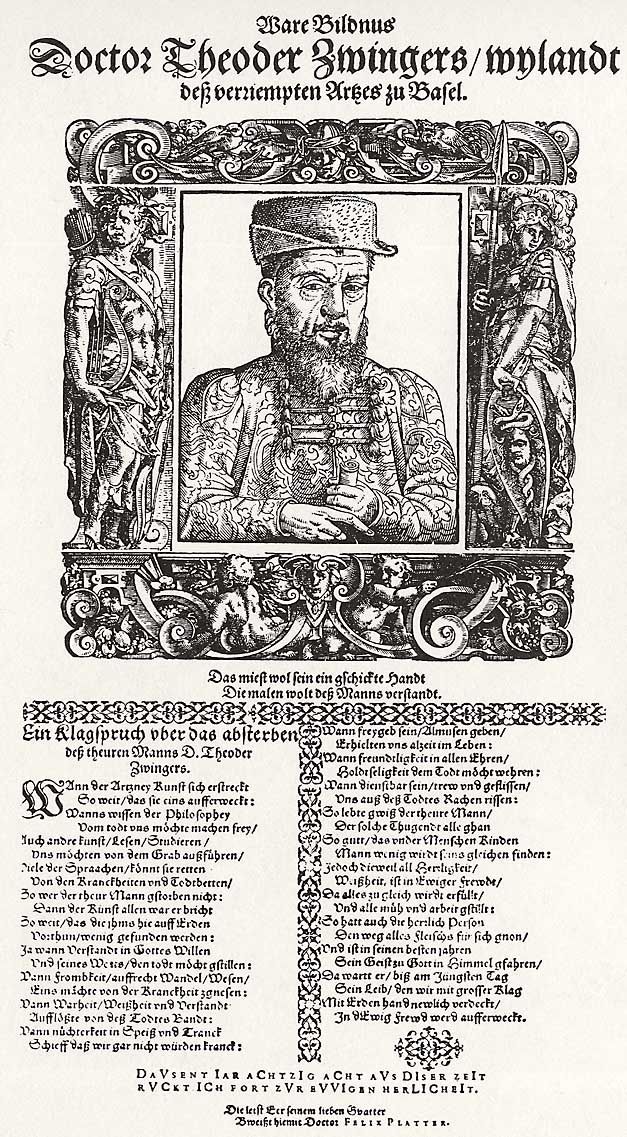
FOR HEALTH AND WELL-BEING In his book of herbs Theatrum botanicum published in 1696, Theodor Zwinger wrote that cocoa was both a food and a medication. Basel-born Zwinger (1658-1724) was regarded as one of the first real physicians and we can thus take seriously the healing properties he attributed to chocolate as used in the treatment of all kinds of illnesses and ailments. For example, to treat coughs and to strengthen the heart, to protect against stomach complaints, respiratory problems and phlegm, as well as diarrhoea and dysentery. When combined with nutmeg and almonds, he attributed aphrodisiac properties to chocolate, writing that it roused the libido and was given by wives as a love potion to their husbands.
The art of the confectioner So, when did solid chocolate appear on the scene? The chocolate bar? The chocolate that is not dissolved in a beverage or used in a sauce but that is enjoyed as a compact piece? The answer is at the beginning of the machine age when more and more work was rationalised and when processes that either difficult or impossible to carry out manually could be performed by machine.
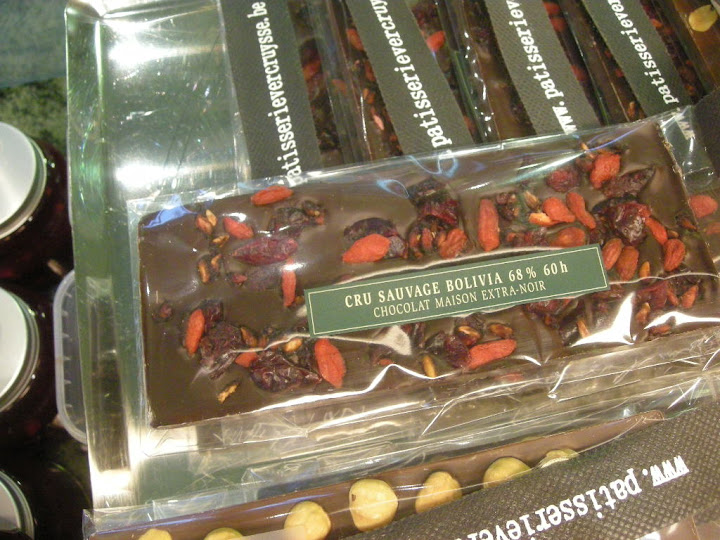
Today, we have couvertures, the raw material of the chocolatier and the confectioner. We also have chocolate bars with just a few ingredients, such as sugar, vanilla and milk, as well as those with a greater range of ingredients, such as nuts (hazelnuts, walnuts, almonds, pistachios, macadamia), pieces of fruit, fruit aromas or fruit jellies (oranges, apricots, raspberries, grapes), or flavour combinations with coffee, nougat or caramel. Chocolate can take a lot of added ingredients. At the start of the new millennium, new combinations were launched on the market, mainly dark chocolate with lemon or grapefruit oil, fleur de sel, rosemary powder, cardamon and cinnamom, lavander and mint of curry spices from India, Thai curry, pink pepper or chilli.
Todays vast arry of confectionery and cakes would be inconceivable without chocolate. Originally, sweets did not contain any chocolate at all and were instead based primarly on oriental recipes perfected in the Viennese court. Pralines in the form of sugared covered in chocolate were first available in France in the 17th century. There are no known recipes for chocolate cakes dating back to before the 19th century. In 1832, a 16 year-old apprentice called Franz Sacher invented the now famous Sacher-torte. This features chocolate as a glaze and the method has since become indispensable for lots of exquisite sweets. The development of ice-cream-on-a-stick saw chocolate used as a solid covering that held the ice-cream together, for a while at least. The ptissier continues to make black-forest gateau and, of course,mousse au chocolate. The specialist are the chocolatiers and confectioners working only with chocolate. On nest pas dans la farine is their motto.

Danta Rosa de Jamaica & 75% Ujuxtes
Top chefs experiment In top restaurants, chefs experiment with chocolate and traditional recipes in order to create something new. The following dishes that were developed by a small selection of creative chefs sound simply divine:mousse au chocolate with olive oil (Martin Dalsass, Sorengo);terrine of goose liver in Riesling jelly with chocolate brioche (Hans-Peter Hussong, Uetikon);blood sausage with black chocolate, olives and hay-chocolatemousse(wuth aftermath, full cream and white chocolate; Stefan Wiesner, the Sorcerer of Escholzmatt);pamplemousse confits entiers avec gteau au chocolate noir coulant (Nicolas Le Bec, Lyon).
Franz Wiget from Adelboden restaurant in Steinen near Schwyz has devoted a lot time to the use of chocolate in the kitchen. This is partly at Felcjlins request since the company is keen to showcase the whole range of its aroma wheel of Grand Cru varieties in a top restaurant such as the Adelboden, which is situated near its manufacturing facilities. Its quickly became clear that working with chocolate and its characteristic range of flavours is a complex tast and that chocolate cannot simply be randomly combined with absolutely everything. The biggest obstacle is the sugar, explains Franz Wiget, which is why he works with finely-rolled Grand Cru cocoa mass that not contain sugar and, thanks to the skilled, restrained use of cocoa mass, has created some amazing and harmonious disches. The unsweetened, dark chocolate is particularly delicious in combination with olives, red meat and crustaceans. The folowing is a selection from the chocolate menu featuring the Arriba, Maracaibo and Cru Sauvage varities created by Franz Wiget for Felchlin:Croustillant with green-olivetapenade and chocolate( a tapenade is a spread over a thin triangular pastry base, a second piece of pastry is placed on top and the whole thing is baked until crispy; the tip of the triangle in then dipped in chocolate and croustillant is left to cool). Cappuccino with potato puree and chocolate(potato stock in a glass with cubes of chocolate, covered in foamed milk and with cocoa powder scattred over the top). Lobster soup withchocolate(made in the traditional way, thanks to the roast aromas that unfold during cooking, the lobster soup already tastes of chocolate; Franz Wiget simply adds two or three pieces of chocolate to the soup). Foie graswith chocolate and orange marmalade( the foie gras contains wafer-thin slices of Arriba cocoa mass that appear as black stripes when the foie gras is cut; the bitter-sweet marmalade goes with both the liver and the chocolate, the opulent aromas complement each other to perfection).
Beverage matching It only now remains to look at which can be enjoyed with chocolate.
 n Marseille, it is the custom to break off a piece of pure, non-sweetened, hard cocoa mass and enjoy it with a little olive oil and an aperitif. Sweet wines in particular are a good complement to chocolate, for example, wines containing grape varieties such as Syrah, Rousanne or Grenache, wines such as Cte du Rhne, Banyuls, Chateauneuf-du-Pape, Bandol, as well as heavy Sicilian and other Southern Italian wines that often reveal chocolate on the palate during tastings.
 The volatile aromas of distillates, such as Cognac, Armagnac or single-malt whisky, are simply superb in combination with the aroma and flavour of chocolate and can be enjoyed, for example, when unwinding at the end of a long day, to finish a delicious meal or simply on their own, since this is the union of two highly compatible partners, a marriage with fine prospects for a long, lasting finish. The reserve is also just as effective: chocolate containing spirits or liqueurs, for example, kirsch or absinth, cognac or whisky chocolate bars. Then, of course, there are alcohol-filled chocolates (ganache).

Chocolate has the reputation for being an aphrodisiac and is a subject of heated discussion. However, if this is true, then the effect must be more in our minds than the result of any physical reaction since chocolate has not been scientifically proven to contain large quantities of any arousing substances.
Theres no doubt that, two to three hunderd years ago, the healing power of chocolate was much more pronounced than it is today. However, if we consider the number of chemicals the human body is subjected to today in the 21th century compared with the 17th century, how many substances modern man takes on a daily basis, such as vitamin pills and contraaceptive pill, then the little bit of magic present in chocolate is really not going to make that much of a difference, either to the invalid or to the lover.
However, we can console ourselves with the knowledge that chocolate is uplifting, that it is a quiet pleasure containing essence that help us to overcome lifes bitter disappointments, reinforcing what the infant realises the first time it suckles at its mothers breast, namely sugar means love and a feeling of security. This first formative experience of taste is the most important and remains with us throughout our lives, even if, in adulthood, we have to learn self-denial and prefer to eat something savoury rather than chocolate. Self-denial has been the enemy of chocolate for years, ever since the ideal beauty has been that of the ultra-slim model, dictating fashions and setting the tone of society in which we live.
Wherever self-denial is involved, quality of life inevitably suffers. However, a specific pleasure is a way out of dilemma we experience when caught between the opposing states of joy, frustation and desire for good healt: we dont want just anything; we want the best. For example, chocolate that has been manufactured with the utmost care and devotion to detail, every step of the way as at Felchlin. In short, we want a superior chocolate. Our own small piece of luxury.

next final episode:
The Innovators In Pursuit of the New for 100 Years (the history of Felchlin)
While going through the research for the most favourable destinations for cocoa plantations and also the suppliers of cocoa to produce good quality chocolate,i came across this wonderful article from the Buisness Standard India for which the link is provided below.
www.business-standard.com/india/news/stella-sweetens-indian-cocoas-fortunes/467769/
What pleased me immensely after reading the article was to see India emerging as a high quality cocoa producer and providing for the demand as well.
At the International Confectionary Fair in Cologne (Germany) Chocolate Stella's Indian version of a 70gm bar with 72 percent of high quality cocoa was released globally.The whole event was called" INCREDIBLE INDIA", where this exquisite high quality Swiss dark chocolate produced with cocoa coming from India was launched . How amazing it is that a Swiss company is importing cocoa for the manufacturing of chocolates?
The credit goes to the sustainable project undertaken by chocolate stella and their continuous support to IOFPCL(Indian Organic Farmers Producer Company Limited) based in the southern state of india ,kerela ........."gods own country".
Because of this Swiss-Indian joint venture the cocoa growers in Kerela will be finally recognised for their efforts and hard labor.The Fair Trade certification will also ensure better revenues and improved working & living envoirnment for the farmers.
www.swisschocolate.ch/index.cfm/Zone/Pub/Page/product
The Art of Chocolate. From the Finest Cocoa to Exquisite Chocolate. part 9a
By Vercruysse Geert, 2012-03-18
Published by Max Felchlin AG, Schwyz, on the occasion of the 100th anniversary. (2008)
The Pleasure
From Chocolate to an Agent of Delight

Solid chocolate that does not contain additives is perishable; it should not be left for too long before it is consumed as it will not improve over time. It should always be stored under dry conditions and at a constant temperature of between 12C and 20C; cold, heat and light are equally harmful. Under these conditions, it should keep for a relatively long amount of time: dark chocolate for up to two years, milk and white chocolate for up to one year. Dark chocolate has a longer shelf life than white chocolate, since the latter contains milk components wheraes dark chocolate contains oxidation-inhibiting substances, such as polyphenoles, for stability. Some additives reduce both suitability for storage and shelf life. These additives include milk and cream powder or nuts, which become rancid over time.
If stored in the fride, chocolate should be kept in a sealed, airtight plastic container to protect it from moisture and unwanted odours (such as cheese, pesto, cooked food), wich it would otherwise absorb. Before it is eaten, it should be brought to room temperature, as low tempearture prevent the aroma from unfolding fully. If chocolate is subjected to a large change in temperature from a very cold to a very warm environment, moisture can release the sugar from the chocolate and, when the water has evaporated, the sugar remains on the surface in the form of crystals; this is known as sugar bloom.
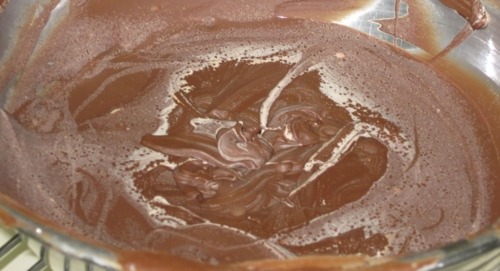
A typical chocolate bar is a mixture of cocoa butter, cocoa solids, sugar, and an emulsifier such as lecithin. The cocoa butter and cocoa solids are made up of hydrophobicmolecules (from the Greek for water fearing) while sugar is generally hydrophilic(also Greek, meaning water loving). Hydrophilic and hydrophobic molecules dont mix well, so an emulsifieris used to help blend the different molecules and keep them from separating over time.
If chocolate is stored at too high temperature, if it is exposed to the sun or subjected to the suns rays hotter than 32 to 33C, fat crystals froms and are deposited on the surface in the form of a white layer: this is known as fat bloom and is often mistaken for mould.
Similarly, fat bloom occurs when hydrophobic cocoa butter molecules separate from the rest of the chocolate and make their way to the chocolates surface. The specific causes of fat bloom are a bit more complicated and have been the focus of several scientificstudies. Who knew so much research went into something as simple as a chocolate bar?
Another danger is oxidation, which occurs if the chocolate is exposed too often to light and air. The fats react with oxygen and become rancid; the aromas vaporise. The higher the cocoa content, the better the chocolate is protected against oxidation. Chocolate is best stored in an airtight container in a dark place.
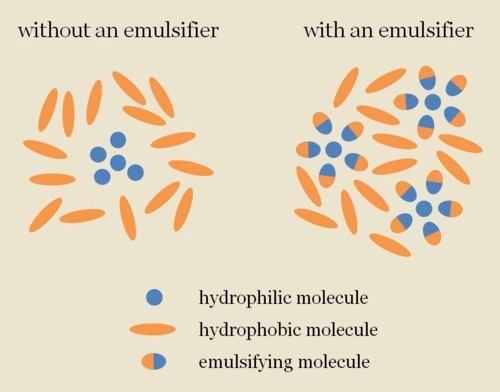
This basic idea of mixing hydrophilic and hydrophobic molecules also explains the driving forces behind chocolate bloom. Sugar bloom occurs when chocolate comes in contact with water. Because sugar mixes with water more readily than the fats in chocolate, any moisture that comes in contact with chocolate dissolves the sugar at the chocolates surface. As the water evaporates, a grainy white mess of sugar crystals is left behind.
An unforgettable drink Although the Spanish were the first Europeans to taste chocolate, by that time, the Mayas and Aztecs has been enjoying the cocoa for a very long time. In liquid form, hot or cold, chocolate has probably been consumed for a good 3.000 years. However, solid chocolate, as we know it today, has been eaten for less than 150 years. The native Mexicans ground the beans into a paste, added spices and pressed it into cakes. To make it into a drink, they scraped the required amound from the hard cake, poured it into a vessel and added water. This chocolate is nothing like the chocolate we drink today. The native Mexican nobility refined the chocolate by adding ingredients such a vanilla, wild honey, agave juice and chilli powder. The conquistadors then adopted the basic recipe, including the vanilla, a New World plant but, because the flavour of the xocolatl of pre-colonial Mexico was too bitter, transformed it to their taste by adding lots of sugar, aniseed, cinnamon, almonds and hazelnuts. The resulting drink was praised for its energising and restorative effects.

A table lined with all the standard tools for preparing chocolate: a ceramic comal or griddle for roasting the beans, a metate or volcanic grinding table, a molcajete or mortar (upper right) for mixing the cocoa with other ingredients and a molinillo (lower left) used to produce the delicious foam that tops Mexican hot chocolate

For many years, chocolate was expensive and exclusive and was enjoyed only by the European nobility. The Spanish monopoly only crumbled when competition emerged from countries such as Portugal and England, and this brought prices tumbling down. Although the raw product became cheaper, chocolate was still not consumed by common man, such as farmers and craftsmen, but it remained the exclusive preserve of the upper middle classes. Chocolate houses opened serving the most expensive of tree new drinks, namely chocolate, coffee and tea. People enjoyed these beverages in vast quantities whilst discussing the topical issues os the day.
The chocolate consumed today consists mainly of cocoa powder and sugar or instant powder; this can be stired into a hot or, in case of instant products, also into a cold liquid. Although, today, real hor chocolate is very much rarity, chocolatiers and specialist shops and outlets that value authentic, honest and first-class products are increasingly re-introducing it. After all, its basically quite simple to make: take a few peices of chocolate (preferably different varieties of Grand Cru with varying cocoa contents up to 100 percent), dissolve them in hot, fullfat milk, stirring continuously, and there you have it: a delicious, slightly foamed hot chocolate drink.

Hot Chocolate, Raimundo de Madrazo y Garreta (Spain 1841-1920)
Next time: A mellow sensation, marvellous aromas.
As I am writing you from INSIDE the factory ofThe Grenada Chocolate Company, one of the very first tree-to-barorganic chocolate cooperatives,I am trying not to get distracted by all the chocolate smells around me - or to drift away too long looking at the mango tree and tropical forest from the open window next to me...
I came to visit Mott Green as he is preparing for his exciting FairTransport event! Mott Green is thefounder of the company and passionate chocolate maker who had a dream to transport his chocolate carbon neutral from the tropics to markets in the US and Europe. By teaming up with the Dutch shipping companywhich issailing the world on wind energy,this dream is becoming reality as we speak, and we will NOW be documenting the FIRST EVER Fair Transport of chocolate

The adventure starts with preparations, my visit here in Grenada, visiting the cocoa plantations and chocolate producers of Grenada, meeting the crew of the sailing ship Tres Hombres and all side stories about chocolate, sustainability and more
For a week we have been waiting in Grenada for the ship to arrive because the winds and current were unfavorable, it has been a very rocky boat on the sea and we were anxiously following their progress, coming from the Dominican Republic.
Thursday the ship has finally arrived: what an exciting day it was indeed! we got up and heard someone had spotted the ship already its a remarkable ship so that was not surprisingly.We have met the crew of the Tres Hombres who are very welcoming, enthusiastic and full of stories about the trip so far which has been very rocky as we have seen on the tracking screen But the spirit is very positive, of course they are real sailors
Have a look at their happiness tasting the first Grenada chocolate; no further comments...

 I will gradually post my experiences here, about the cocoa production of Grenada's special organic beans, about the chocolate making, the passion and dedication of the people here and the whole voyage from Grenada to the US and Europe transporting these 5 tons of chocolate bars! the ship will reach final destination in June, follow it online - now we're off to prepare the departure from Grenada to make sure the chocolate is safe on board...
The excitement is almost tangible. I am in the process of finalizing my O-1 Visa petition and very soon I will be moving to the North Georgia Mountains to commence Blue Pearl Chocolate.
I'm an Outside the Box chocolatier, so look out for some surprises. I'm currently working out a line of bonbons, cut ganache, free-form piped mousses and "loose stuff" as cookies and snacks and fruits.Hand dipped.
I need to start from scratch with equipment so if anyone can help me out with a small tempering machine, a wire cutting frame and a small Hobart or any other planetary mixer that would be awesome. I'm looking out for suppliers too, I like the flavour and Consistency of Callebaut and mainly use 70-30 dark, 811 semi sweet , HW2 white and 823 high-cacao milk...... the Dark Gianduja blocks are awesome too . any suggestions on good flavoured Fair trade or organics? I contacted Dagoba but they never responded... weird huh?
also working out some Organic Goat milk recipes.
I'm loving this Group as it offers a wealth of inspiration and creativity, hopefully In the future I can offer the same.

Its like an itching in the back of your brain .... you can feel it, but can't reach it to ease the sensation. I have worked for many years in the foodservice business, from a mom and pop pizza operation to a multi-million dollar chain. My love has always been food and everything that surrounds it. I remember being 10 or 12 when my uncle started a small restaurant in upstate NY, we visited many times and I thought to myself "I am going to be a chef when I grow up!" Some of my fondest memories are of my French grandfather, Julian, making bread and doughnuts at home after he picked me up from school. Food has always been an integral part of my life. It wasn't until I was well into my twenties that I developed an affinity for candy, which lead to chocolate and all the delicate intricacies that come with it. Well, I never went to culinary school, but got an education of hard knocks while I served in the US Navy. So back to the itch .... I have always had an entrepreneurial spirit, but never had the opportunity to explore it more. I decided I am losing precious years (40 now) and it was time to MAKE the opportunity! So here we go....on the Next Great Adventure! Oh....I guess I need to tell y'all about the idea! I want to open a Chocolate Bar (or Cafe, if you will). A place dedicated to handcrafted chocolates, chocolate inspired drinks (yes, alcoholic also, pending research on ABC Laws), and chocolate desserts. A welcoming and relaxing atmosphere. At this point it is just a lot of research, business planning, and product development (yummmy!). I would love all and any input during this journey. Please don't hold anything back, I am not looking to get my ego stroked, I am looking to make a successful and responsible business, while giving to the customer an unparalleled chocolate experience. Thanks for reading and I look forward to hearing from each and every one of you!
Visiting Turin, the chocolate capital of Italy and the Cioccola-To festival, March 1-5, 2012.
By Vera Hofman, 2012-03-06
My visit to Turin started with a tour in Guido Gobinos factory. In 1985 he took over the company from his father. He optimised the production processes and improved the quality by focussing on excellency and by researching and innovating products. He has succeeded: he is known as one of the best chocolate makers in Italy for years. At this moment there are 27 people working and they produce 900 kg gianduja per day. Of course made with the best hazelnuts from the Piedmont: Tonda Gentile delle Langhe. Unfortunately it was not allowed to make pictures in the production area. To get an impression: I saw the conching process in one of the latest German conches, the refining of gianduja paste and molding and wrapping of Easter eggs. The shop at the factory (the other one is in the city centre) is very beautiful and full of Turins specialities: giandujotti and cremini. My favourites are Gianduja Tourinot Maximo (40% hazelnuts), Coffee Cremini, Cremini with olive oil and sea salt (awarded by AOC) and the very tiny ganaches, sensations for your taste buds!
After this visit I went straight to Piazza Vittorio Veneto, Europeans largest square, where the festival Cioccola-To was located. A wonderful location with a magnificent view over the river Po. On the right side there were stands of the well known Italian brands like Caffarel, Venchi, Leone, Domori, DeBondt, Perugina, Bonajuto, Peyrano and many more. At the left side there were demonstrations and tastings. The event is not international orientated so you have to speak and understand Italian (poor me). Half of the area on this side was sponsored by Milka (too much!). You couldnt avoid the lilac cow. Master chocolatier Silvio Bessone recently started with bean-to-bar production. He brought some of his machines to his stand and you could watch to a part of the production process. The most fascinating machine was the one that wrapped giandujotti very rapidly.
There were less stands than I expected, so there was much time to visit the historical names and the new comers. The history of chocolate in Turin begins in 1559 when one of the Savoys brought some cocoa beans with him. Until 1826 chocolate was served and consumed only as a liquid. Caffarel was the first who start production of solid chocolate. In 1852 cocoa became very expensive, so part of the cocoa was replaced by hazelnuts and gianduja was born. Thirteen years later giandujotti were the first, in gold foil, wrapped chocolates. The following names I have visited: Pfatisch, Baratti & Milano, Ghigo, Giordano, Peyrano, Stratta, Avvignano, Al Bicerin, Gerla, Ciocco & Latta, Guido Gobino (also the shop in the centre with a loungy tasting room), Guido Castagna (opened his stylish shop last year), Piacerie di Cioccolato, Candifrutto bottega del Cioccolato. At all these addresses you can buy giandujotti. But watch out: there is a big difference in quality. The traditional brands are certainly not the best. My favourites are Gobino and Castagna. Both use the best hazelnuts and you can clearly taste that. Castagna even adds Chuao cocoa mass! There is a big difference in drinking (hot) chocolate as well. I tasted the ones of Al Bicerin, Baratti & Milano and again Gobino and Castagna. Although the traditional cafe restaurants of the first two are very beautiful, here again the new comers taste the best. Another typical product well known and loved by Turin is the Bicerin, a drink made of espresso, chocolate and cream, born in 1763 at cafe Al Bicerin.
I ended my visit with a tour in the Choco tram. A fifty minute tram ride through Turin by evening lights. On board chocolatier Guido Castagna, who has won an award for his gianduja, explained us more about chocolate and his creations. We tasted a Sacher Torte with a gorgeous thick layer of ganache on it, giandujotti, filled Easter eggs, hot chocolate and finally we got a goody box with a selection of his chocolates. It turned out an advantage not to speak Italian: I got a private translation by Mr Castagna himself 
Viva La Dolce Torino!


The New York City Craft Beer Festival took place on Saturday, March 3rd, at the Lexington Avenue Armory in Manhattan. Close to 60 craft breweries and cider makers from around the country were pouring over 100 different offerings covering the gamut of beer styles.
I was asked by Jimmy Carbone, owner of Jimmy's #43 and the host of Beer Sessions Radio on the Heritage Radio Network to give two chocolate and beer pairing seminars - one during each of the afternoon and evening sessions - as a part of the educational program that also included Joshua Bernstein, beer sommelier Hayley Jensen, Adam Levy, and Samuel Merritt.
60 breweries gave me a lot to select from - an embarrassment of riches, in fact. After consultation with Jimmy and others, I narrowed the selection down to five beers, all from breweries pouring at the event, each a different style. My goal was to select as many brews as possible that were not being poured in the tasting sessions, and four of the five brews I selected were only served in my pairing programs.
And, because I like to live dangerously ... I had actually tasted just three of the five brews and four of the five chocolates before the day of the festival, and I'd only tried one of the pairings. I was trusting my gut that I could make the rest work as I imagined in my mind.
The five breweries and brews were (in the order they were served):
1) Brooklyn Brewery (NYC) Pennant Ale - (English Pale Ale)
2) Wandering Star (MA) Zingari Witbier
3) Blue Point (LI, NY) RastafaRye
4) Clown Shoes (MA) Muffintop - Belgian Trippel style IPA (India Pale Ale)
5) Firestone Walker (CO) Sucaba - Barleywine aged in bourbon barrels
With these five brews I paired six chocolates (also in the order of service):
1) Valrhona Tanariva (33% milk)
2) Pacari Lemongrass
3) Valrhona Guanaja (66%)
4) Valrhona Caraibe (70%)
5) Ki Xocolatl Oregano and Almond milk
6) Raaka Bourbon
Beer and Chocolate?
Over time, I have come to understand that pairing chocolate with beers is not only easier than pairing with wines, it's also a lot more fun and satisfying. Part of my enjoyment is that the craft beer and fine chocolate audiences have a lot in common. It's a lot more satisfying because "everyone knows" that chocolate and wine go together so introducing them to the nuances of beer with chocolate is a new experience for most of them. It's also easier because chocolate and beer not only share fermentation flavors, but also roast flavors, plus the soft bubble structure of beer complements the texture of chocolate; it does not clash the same way that tannins in wines often clash.
Beers tend not to be vintaged, as most wines are. So when you find a beer you like, chances are that it's not going to change in flavor from year to year as wines can and do. I ran into this recently where I asked for a wine for a pairing and the 2009 that I had always used was no longer available ... the merchant delivered the 2010 vintage and it was not the same wine at all!
Finally, virtually all beers are lower in alcohol than wines. This means you can enjoy more beer with your chocolate because you don't get buzzed nearly as quickly.
My number one tip for pairing beers with chocolates? Select beers that can be served at something close to room temperature. Beers that need to be really cold (or are served too cold) are really hard to work with because they cause the fat in the chocolate to harden, slowing down the release of chocolate flavor.
My number two tip? Don't go for the obvious choices. You will notice there is not one stout, chocolate stout, or porter in my pairing lineup, and half of my chocolate selections are not mainstream. Why? Because what would my audience (and I) learn from staying within the bounds of what is obvious?
The Pairings
#1 - Brooklyn Brewery Pennant Ale with Valrhona Tanariva
I am a contrarian when it comes to wine pairings, and I tend to prefer pairing white wines (I like a loit of Gewrztraminers and my all-time favorite pairing wine is Prosecco) with dark chocolates and red wines with milk chocolates whenever I can. Many chocolate "connoisseurs" think it's bad form to admit they like milk chocolate (just as wine drinkers have been trained to say they prefer pinot over merlot), and these days, IPAs not English Pales Ales are all the rage. So what better way to start a pairing program than by crashing through stereotypes by pairing a classic French milk chocolate with an English Pale Ale?
In this case, the warm bready, yeasty flavors of the beer marry extremely well with the rich, sweet, caramel notes of the milk chocolate. The very soft bubble structure of the beer mingles well with the soft, velvety texture of the chocolate. This pairing was selected to highlight how the texture of the beer plays an important role. Plus, I also happen to like this particular milk chocolate. A lot. The pairing is obvious in hindsight (hind-taste?).
#2 - Wandering Star Zingari Witbier with Pacari Lemongrass
I forget why I was talking with Wandering Star's Chris Cuzme about this beer, but it was shortly after I returned from San Francisco in mid-January where I attended a Pacari and Whiskey tasting that included the lemongrass bar.
Most Wit beers don't have lemongrass in their recipes, but when Chris mentioned that Zingari did (along with the more traditional coriander and cardamom and the decidedly untraditional fenugreek), I intuited that the lemongrass in the chocolate would provide a nice bridge linking the two. And I was right. What was also nice was that the additional lemongrass notes in the chocolate enhanced the other spices in the beer, making the combination more complex than either, individually.
#3 - Blue Point RastafaRye with Valrhona Guanaja and Caraibe
The RastafaRye was one of the three beers I'd tasted before the seminars, at Roberta's in Bushwick (which is, coincidentally, the home of the Heritage Radio Network Studios - and some of the best pizza in the NYC metro area; I can recommend the guanciale with egg). The other reason I selected it was because ryes tend to be spicy but without the aggressive piney resinous quality of many IPAs and I wanted a distinct style different from the other brews.
The purpose of this pairing was more educational in nature, rather than being something that I knew in advance "worked." The idea was to taste the chocolate with the beer to see how the flavor of the beer changed with the two different chocolates. (In color theory in art, we call this the principle of simultaneous contrast). Even though the percentages are only 4% apart, the difference in sugar content, as well as the bean origin and roast, make the flavor combinations wildly different.
I always like to include one pairing like this in all my sessions as I get to use it to show part of the process of making the pairing selections. It's also instructive to note that some audience members really prefer one pairing over the other while some don't really care for either.
#4 - Clown Shoes Muffintop with Ki Xocolatl Oregano w/Almond Milk Chocolate
This was one of those completely blind pairings that were either going to be fabulously wonderful or absolute dreck. For me, this was the standout pairing of the session, in part because it was the most surprising. This is a really counterintuitive pairing on the surface but one that makes sense when looked at closely. Still, it would either fail spectacularly or be hauntingly sublime.
IPAs in general are among the more difficult pairing beers, and any beer that labels itself as a hybrid of a Belgian Trippel and an IPA is going to be even more problematic. The challenge is the resinous, piney, bitter nature of the hops - it really does want a fatty chocolate that itself is spicy.
The chocolate is extremely aromatic and Mexican oregano is known for its resinous qualities. The combination was outstanding, with the oregano notes mellowed by the almond and caramel flavors in the milk. Definitely a case where 1+1 equals 3 (but in this case I might make it equal 4).
#5 - Firestone Walker Sucaba with Raaka Bourbon
First off, if you ever see Sucaba available anywhere, try it. It is outstanding and unlike almost anything else you will ever drink. Not very much is made - it's a "proprietor's reserve" limited edition. You will be rewarded admirably if you seek it out.
This was the highest alcohol content brew of the day - ABV 12.5% - and, like the Wandering Star/Pacari pairing was one I intuited would work because ... the Sucaba is aged in bourbon barrels and the Raaka is made from nibs that have been stored in used bourbon barrels to absorb the aroma.
So - they share basic fermentation flavors, basic roast flavors, and the overlay of the bourbon flavors, which have ferment flavors, roast flavors, plus oaky and vanilla flavors from the barrel. See where I am going with this one? While the flavor pairing is a marriage made in barrel-aged heaven (I scored it tied for second with the Zingari/Pacari pairing in my mind), what's most interesting and unusual is the way the deep earthy base note from the chocolate tamed some of the residual sweetness of the barleywine, adding layers of depth and complexity that brought out some of the fruitiness in the chocolate and lowered the "center of gravity" of the tasting experience in the mouth.
Concluding Thoughts
The point is to have fun and to experiment, and understand that not every pairing has to work. In fact, pairings that don't work can be more instructive than pairings that do.
Tasting is a conscious process, where you go slowly and pay attention to what your senses tell you about what you are smelling, drinking, and eating. What's important, and what takes practice, is to build up sense memories that you can call on. People who are really good at this can imagine what pairings will be like in their mind. I won't pretend that I am really good at this - I have a lot to learn, still - but I "knew" in advance that the lemongrass pairing would work and I had a very good sense for how the bourbon pairing could work. I could also "taste in my mind" how the oregano could go with a hoppy IPA.
All it takes is practice - and a sense of humor. It's okay to take the chocolate and the beer seriously - but don't take yourself too seriously.In the end, it's just beer, and it's just chocolate.
Acknowledgements
Thanks to the festival organizers and Jimmy Carbone for inviting me to present. Also to Chris Cuzme of Wandering Star, Jordan at Union Beer Distributors, and Brookly Brewery for helping me with my beer selections. Conrad Miller of Chocolate Earth provided much of the chocolate, and all of the chocolates served during the pairing are available through Chocolate Earth (DUMBO - Front St). Thanks also to Louis Varela of Ki Xocolatl for providing their chocolate. Louis returned from Merida, Mexico the day before the session and brought the chocolate with him, requiring some extra special last-minute coordination with Conrad. I would also like to thank Mary Izett and the staff from Jimmy's who provided invaluable assistance during setup, greeting guests, and pouring the beers. Their hard work and professionalism made my job a whole lot easier.
You can listen to the episode of Beer Sessions Radio that aired the Tuesday before the festival, where I talk about beer and chocolate with Garrett Oliver, John Holl, Mark Zapp, and Jimmy Carbone, on-line . It (and all Beer Sessions Radio episodes) are also available for download as podcasts on iTunes.
Hello Chocolate Life,
I haven't participated in any forums before or done any blogging.
No time like the present I suppose.
Last week I managed to visit 2 chocolate shpos in Melbourne. One in Smith Street Collingwood and one in Collins St in the city.
On visiting a new chocolate shop I like to try the hot chocolate and the dark chocolate truffles. If these are above reasonable quality then it is worthwhile trying other products. If not then don't look back!
The hot chocoates were both very nice. The city one much more creamy and to my palate then the other. Unfortuantely I was in a hurry so was not able to try any of the truffles.
Given the quality of the hot chocolates the truffles will be worth a visit!
One of Melbourne's increasingly endearing qualities is the rising number and high standard of chocolate in the city.
Jas
Le Marais Chocolat Makes Organic Chocolate Truffles with a Purpose
Santa Monica, CA (February 27, 2012) Leslie Berliant has been cooking, baking and candy making since she was a little girl. She even had a catering company at the tender age of 16 and recently spent a year cooking everything from scratch and blogging about it. Her latest adventure in chocolate, however, began two years ago out of her personal passions for cooking, Fair Trade chocolate, dreaming up unique flavor combinations, and a desire to help after the earthquake in Haiti. Among other fundraising efforts for the foundation program she co-founded to help in the aftermath of the Haiti Earthquake in 2010 - BLU MOON Foundations Haiti Orphanage Adoption Program (HOAP) - she began selling truffles to friends and family at the holidays as a way to raise funds. Those truffle sales, contributed to clean water installations, critical food and supplies, school uniforms for 50 kids and an orphanage renovation.
This last holiday season, friends, and friends of friends, started buying truffles in larger numbers, 60 here, 100 there, and over and over again, people who didnt need to be nice about it told me these are better than (fill in a favorite high-end chocolate here). You should really do this as a business, Leslie explains, so I listened and took the leap! I chose the name, Le Marais Chocolat , because the truffles are hand-crafted and made in small batches, so each one is unique and rustic, but also high end and delicious, kind of like my beloved Le Marais neighborhood in Paris - its artsy and funky with aristocratic roots. Leslie says that since starting the company in January of this year, her friend have been incredibly supportive and encouraging. And on her first sales call, she sold 50 boxes to a local specialty food and wine retailer.
Now she is turning to the wider community to help raise funds on Kickstarter for Le Marais Chocolats Fair Trade Certification. Ive been a big advocate, one might even say proselytizer, of Fair Trade and especially Fair Trade chocolate since learning about the rampant use of child slave labor in the cocoa trade. We already use all Fair Trade Certified organic chocolate and many other Fair Trade and organic ingredients, but its important that we show our commitment by becoming a Fair Trade member and using the Fair Trade logo on our packaging.
The funds raised on Kickstarter will also help Le Marais Chocolat truffles make their way into some local farmers market where Leslie hopes to not only introduce people to her locally made truffles, but also be an advocate for Fair Trade.
I want to share my love of chocolate with the people that cultivate it, the communities where its grown and the people that savor it, Leslie explains. I also want to raise money for micro-organizations that dont have access to big donors but are making a difference in peoples lives. I created Le Marais Chocolat for chocolate connoisseurs like me that care about incredible taste, organic ingredients, fair trade practices, the environment and giving back--all in one little truffle!
Based in Santa Monica, California, Le Marais Chocolat creates small batch, hand-dipped chocolate truffles using organic Fair Trade Certified chocolate, organic cream and other locally sourced, organic ingredients to create delicious, rustic, handcrafted truffles. Unique flavors like Black Walnut, Rosemary Orange, Lemon Thyme and the signature Le Petit Prince truffle made with the fruit of the baobab tree, combine fresh herbs, flowers, fruits and other ingredients. All the chocolate used is organic and Fair Trade Certified and a portion of every sale is donated to charity. www.lemaraischocolat.com
Kickstarter - http://www.kickstarter.com/projects/lemaraischocolat/le-marais-chocolat-gets-its-fair-trade-certificati
Facebook - https://www.facebook.com/LeMaraisChocolat
For more information please contact Leslie Berliant at 310.403.1221, info@lemaraischocolat.com