
Blogs

Brand New Dry Roasting machine, I just got it from Turkey last week. Want to sell it because we sold the business. I was waiting for machine more then 2 mounts. ASAP. 20k
Dr Xiaonan Lu has been chosen by IUFoST for the "Young Scientist Award 2016". IUFoST regroups more than 300,000 food scientists and technologists worldwide.

The 30th anniversary of the cacao lab at Penn State’s College of Agriculture was honored during last week’s Frontiers in Science and Technology for Cacao Quality, Productivity and Sustainability symposium.
The sold-out program attracted over 150 attendees from around the world, and consisted of nine sessions and 45+ presentations over five days, not including poster presentations, break-out sessions, breaks, and meals over four days. Presentation topics ranged from Effects of Microclimatic Variables on the Symptoms Onset of Moniliophthora Roreri, Causal Agent of Moniliophthora Pod Rot in Cacao through Genomic Approaches for Understanding and Exploiting Natural Variation in Genetic Resistance to Climate Variation to Cocoa Diversity and Quality in Southern Mexico.
I have to admit that much of the science presented challenged my understanding at many levels. First, I am not fully versed in the vocabulary of genomics and comprehending many of the genome graphics takes a lot of concentration. While my understanding is clearer today, it’s a lot like learning any new language, and it takes regular contact and use to become fluent.
There was a special presentation on Monday evening for those who arrived early. Professor Mathew Restall and Associate Professor Amara Solari (Penn State’s experts in Maya history and art) showed the film Chocolate: Pathway to the Gods and after provided insight from a Mayanist perspective into how the film compressed history and conflated Aztec and Maya cultures, blurring important distinctions between the two, and what that means to our understanding of the uses of cacao in the two cultures. For me, this combination of history and culture, provided a foundation for thinking about the science that was going to be presented over the course of the next three days.
Things got off to a great start late Tuesday morning with a tour of the Cacao Molecular Biology lab run by Drs Mark Guiltinan and Siela Maximova. Presentations of some of the current work going on was given by students in the lab. This was followed by a visit to the greenhouses where cacao trees are grown for research purposes. This was followed by a session on the history of the lab and a presentation by the founder of the lab.
Things started early on Wednesday morning with the start of the main sessions and presentations. It’s impossible to go into detail about any of them but highlights for me connected the science to culture, history, and archaeology.
Juan Carlos Motamayor spent a lot of time during his talk (Leveraging the Cacao Genome to Identify Candidate Genes Regulating Key Traits) discussing compatibility, or the ability, or lack thereof, of a tree to fertilize itself.
I had not thought about this before, but it turns out that self-compatibility is a trait that could have influenced which varieties of cacao were traded from their home on the eastern slopes of the Andes over the mountains to coastal areas before heading northward to Mesoamerica. It makes a lot of sense to transport material that can fertilize itself. Thus the South American ancestors to criollos were likely the ones selected to make the journey while auto-incompatible varieties would not have been transported.
This idea was echoed in the next session by Hugo Francisco Chavez Ayala, of the Sierra Technical Institute in Teapa, Tabasco, MX. Hugo (who coincidentally is actively involved in the Grijalva project I am working on in Tabasco), pointed out, based on his research, that cacao in Mesoamerica was most likely traded up the Pacific coast rather then across the Caribbean coast from the mouths of the Orinoco and Amazon Rivers because of the comparative difficulty of logistics due to geography.
One of the factors that could have driven the trade was the stimulant chemicals present in the cacao; there are no plants with stimulants such as caffeine and theobromine native to Mesoamerica. Hugo pointed out a likely vector for the spread of monilia in Tabasco (which only started making its presence felt a decade ago) - migrant workers from Guatemala, Honduras, Costa Rica, and elsewhere taking trains to find work in the US. It is possible to trace the spread from along railway lines where workers would have transported the moniliophthora spores on their clothes.
Hugo also showed my favorite single image of the symposium, one where he overlaid important archaeological sites over Motamayor’s 2008 map showing the ten different cacao varieties and their division into the two major structure groups. It brought the point home in a way that Motamayor’s map, on its own, had not.
It was a great pleasure, during the symposium, to meet for the first time people whose names I have known through reading their research papers. Perhaps more profoundly, the symposium brought into clear focus the dedication of professionals around the world committed to understanding cacao and who are working to help ensure that it continues to exist, in abundance, for future generations.
As a writer, I know that it is very important to recognize and acknowledge my sources, and this past week I learned that this community of research scientists is one that I owe a debt that is impossible to calculate. In many respects, everything I do - and have done over the past fifteen-plus years - is dependent, on some level, on the hard work of people I met at the symposium and their colleagues around the world.
I want to extend my thanks and acknowledge their invaluable work. I am humbled to be included as a member of this community and look forward to working on current and future challenges.
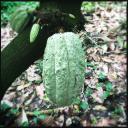
Mexico occupies a special place in both the genetic and socio–cultural histories of chocolate . Despite that importance, very little is known about Mexican cacao because very little of it leaves Mexico.
Two states, Tabasco and Chiapas, produce the majority of cocoa in Mexico, with Tabasco producing about 18,000MT (dry) and Chiapas another 4,500MT annually. (There are small amounts in Oaxaca and Veracruz.) Of this roughly 22,5000MT, it is estimated that less than 100MT is exported each year.
The reasons for this are complex, but one large contributing factor is that cocoa processors in Mexico are required to buy up the local harvest before they can import from other countries. What this does is create a situation where the farmers have guaranteed buyers for 100% of their production, irrespective of quality. As a result, the price the farmer can charge for unfermented and washed cocoa in the domestic market fluctuates around US$5.00/kg - a significant premium to the current world market price for fermented cocoa, and three times the farm gate price in most places in West Africa.
Well-fermented cocoa easily commands $7/kg on the domestic Mexican market and specialty cocoas (criollos, some ancient and some new) can fetch prices of up to $11/kg. So it’s easy to see why export volumes are low.
Last November, I had the good fortune to be invited down to Villahermosa in Tabasco, Mexico, to participate in the annual Festival del Chocolate. Despite being relatively young (less than ten years), the festival attracted more than 200,000 visitors over the course of its five day run in 2015.
While there I also visited Rancho La Joya (the source of the infamous ‘carmelo’ cacao), as well as other farms - small and large; a big new post–harvest processing facility; and a small chocolate factory.
What I saw was cacao – even at La Joya – was being fermented and dried under less than optimum conditions. Based on my experience with the Academia de Cacao in Nicaragua, I knew that scientific methods could be applied, and fermentation and drying protocols developed, based on the specific genetics being grown and the microbiology of the fermentation pile – the yeasts and bacteria (lacto- and aceto-) – endemic to the region.
I also learned that the government of Tabasco had invested a lot of money in a public/private partnership to expand production of high–quality varietals. I discovered that the partnership hadn’t put a great deal of thought into how they were going to sell the cocoa they were gearing up to produce. They just assumed white beans == criollo == international buyers at high prices. In part based on one legendary transaction.
This is loosely analogous to what happened over the last decade in Perú, where USAID and NGOs, working with the Perúvian government, had done a good job of growing supply without really thinking about demand: Tabasco was set to increase production of quality varietals without really thinking about how to market that cocoa internationally (or price it). Eventually, this led to major elements of the programming for the Salon del Cacao y Chocolate — bringing down international visitors to get a deep dive in Peruvian culture, meet growers, and, hopefully, buy a lot of cacao.
In addition to the Festival del Chocolate in November, there is another Festival hosted in Tabasco mid-Spring; Feria Tabasco. Dating back to 1786 and held every year since the early 1950s, in recent years the attendance at Feria has surpassed 2,000,000 visitors (with over 1000 vendors and exhibitors) over the course of eleven days.
While in Tabasco last November I conceived a project that combines my experiences in Peru with my work with Ingemann in Nicaragua. Encouraged by my hosts, we presented those ideas to the Ministries of Agriculture and Economics as well as to the head of the public/private partnership. Encouraged by the unofficial response, I collaborated with three partners – two in Mexico and one in Europe – to write a project plan that was submitted to the Tabasco government in early January.
In broad strokes, the idea was to create a competition to search for the best cacao in Tabasco and to use the competition as the platform to gather together a project team that would work with selected farms (the first year between 10 and 20). The team would perform genetic and microbiological analysis and work to develop optimum baseline post–harvest protocols to ensure that the cacao was being fermented and dried respectfully.
The project and competition would be formally announced during Feria (which runs from April 28th through May 8th this year) in order to gain maximum attention from within and outside of Mexico.
The competition would be judged, and prizes awarded, at the 2016 Festival del Chocolate in late–November. As at the Salon on Perú, chocolate professionals and members of the press from all over the world would be invited down to Villahermosa to judge, to celebrate Tabasqueño food and culture, to become steeped in the long and proud tradition of cacao in Tabasco, and to have the opportunity to be among the first buyers of the cacao being produced.
After nearly six months of work and waiting, I am happy to announce that the project is starting, with me as the project lead/coordinator. I am flying down to Villahermosa on April 28th for Feria to meet with the project team, members of various ministries of the Tabasco government, and many of the farms and farmers we want to work with.
For me, personally and professionally, this project represents a watershed period in my life and career in chocolate. It’s a project I conceived and that I get to lead. There is a focus on quality while also building export markets. The project stretches from the farm to the factory to the mouth. I get to work with a group of extremely talented and dedicated people and there is the chance that the project could make valuable contributions to our understanding of the genetics of cacao in Mexico. I am also very excited that the project team will also be working with the Mexican federal government to help identify the technical parameters for a formal protected denomination of origin (PDO) for Mexican cocoa.
it also means that I will be doing a lot of traveling to Mexico over the course of the next six months — at least. I will be posting on TheChocolateLife.com to keep people in the loop, and the project has secured the domain name CacaoFinoMexico.com which will become the hub for promoting the project’s work and progress (there’s nothing there now and won’t be until after I return from this first trip).
I hope that you will follow the project and that you will consider visiting Tabasco in the future – for Feria, for Festival, for the food, and of course, the cacao and chocolate.
[Edited on 4/23 to fix typos and grammar and to improve clarity.]
Just received a fresh cacaopod, form Colombia, how nice is this!!
Shall open this one very soon...


